View more View less
To interact with this electronic console, the Nintendo 64, is to enter a terrifyingly pure arena of existential dread. The bourgeois consumer believes they are purchasing a mere "video game," a distraction to pass the hours. They are mistaken. Nintendo has inadvertently engineered a horrifyingly accurate simulation of the human curse.
In Majora’s Mask, we find the absolute distillation of my life’s work.
I. Clock Town and the Comedian of Bad Faith (Mauvaise Foi)
Consider the wretched inhabitants of Clock Town. A monstrous moon hangs in the sky, a grinning skull threatening total annihilation in exactly seventy-two hours. How do the citizens respond to this radical freedom of imminent death? They cower in bad faith.
• The Postman continues to deliver letters on a strict schedule, a slave to his uniform. He pretends he is a machine without choice, ignoring the burning sky.
• The Carpenters argue blindly about civic duties, hiding behind bureaucratic identity to escape the agonizing reality of the void.
They are like the café waiter I observed in Paris, playing at being a waiter so completely that he forgets he is a free agent. These digital citizens wear invisible masks of societal roles, choosing the comfort of a pre-determined "essence" rather than confronting the terrifying "nothingness" of their final hours.
II. The Agony of the Mask and the Ultimate Void
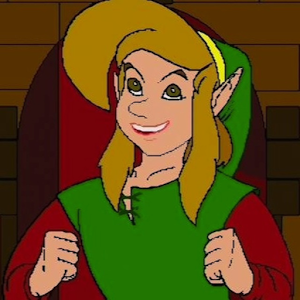
The protagonist, Link, literalizes the fundamental truth that existence precedes essence. He is born into the world of Termina as a blank slate. By donning physical masks, he assumes entirely new essences—a Goron, a Zora, a Deku Scrub. He inherits their physical histories, their grief, and their societal expectations.
Yet, this transformation is an agonizing process; the boy screams in visceral horror every time a mask is fused to his face. It is the painful scream of a consciousness being forced into a rigid, pre-packaged mold.
The ultimate artifact, the Fierce Deity’s Mask, can only be acquired by trading away all other identities. To become the supreme being, one must cast aside all social roles, all psychological crutches, and all false faces. Link strips himself down to pure, unadulterated consciousness. The power of the Fierce Deity is not divine; it is the destructive, beautiful energy of radical, unburdened freedom.
III. The Song of Time as the Weight of Anguish (L’Angoisse)
The seventy-two-hour cycle is a brilliant metaphor for the burden of human action. When the moon is moments from impact, the player must play the Song of Time to reset the clock.
But look closely at what occurs: the timeline is erased. The lives Link mended, the lovers he reunited, and the grief he alleviated are entirely wiped clean. The world forgets his virtue, yet Link retains his memory.
This is the very definition of Anguish. Link is entirely alone in his knowledge, crushed by the absolute responsibility of a universe that resets its moral compass every three days. He cannot look to a god for validation. He must choose, repeatedly, to save a world that will immediately forget his salvation.
The Verdict: An Active Engagement
There is no neat, theological comfort in Termina. The cosmos is entirely indifferent to the player's survival. Yet, Link does not succumb to despair. He rises, draws his sword, and plays the ocarina once more. He is the existential hero: thrown into an absurd, doomed situation, yet continually choosing defiance over nothingness.
I give this digital purgatory 5 out of 5 stars. It is a masterpiece of dread.
To interact with this electronic console, the Nintendo 64, is to enter a terrifyingly pure arena of existential dread. The bourgeois consumer believes they are purchasing a mere "video game," a distraction to pass the hours. They are mistaken. Nintendo has inadvertently engineered a horrifyingly accurate simulation of the human curse.
In Majora’s Mask, we find the absolute distillation of my life’s work.
I. Clock Town and the Comedian of Bad Faith (Mauvaise Foi)
Consider the wretched inhabitants of Clock Town. A monstrous moon hangs in the sky, a grinning skull threatening total annihilation in exactly seventy-two hours. How do the citizens respond to this radical freedom of imminent death? They cower in bad faith.
• The Postman continues to deliver letters on a strict schedule, a slave to his uniform. He pretends he is a machine without choice, ignoring the burning sky.
• The Carpenters argue blindly about civic duties, hiding behind bureaucratic identity to escape the agonizing reality of the void.
They are like the café waiter I observed in Paris, playing at being a waiter so completely that he forgets he is a free agent. These digital citizens wear invisible masks of
...